ESSENTIAL HAJJ RITUALS
Hajj is the fifth pillar of Islam, a mandatory religious duty for Muslims that must be carried out at least once in a lifetime by every adult Muslim who is physically and financially capable. The rituals of Hajj are performed over five to six days, from the 8th to the 13th of Dhul Hijjah, the last month of the Islamic calendar. Here's a comprehensive guide to the essential rituals of Hajj.
Introduction to Hajj
Hajj is a demonstration of the solidarity of the Muslim people and their submission to Allah. The word Hajj means "to intend a journey," which connotes both the outward act of a journey and the inward act of intentions.
The rituals of Hajj are symbolic of the events in the life of Prophet Ibrahim (Abraham) and his family. By performing these rituals, Muslims commemorate the trials and tribulations of Prophet Ibrahim, and celebrate the mercy and forgiveness of Allah.
Preparation for Hajj
Intention (Niyyah)
Before beginning the Hajj, pilgrims must make a sincere intention (niyyah) to perform Hajj solely for the sake of Allah. This intention is a crucial element that transforms the physical journey into an act of worship.
Ihram (State of Purity)
Before entering Makkah, pilgrims enter into a state of Ihram – a special state of purity. Male pilgrims wear two white seamless sheets, while female pilgrims wear simple, modest clothing. In this state, certain activities are prohibited, including cutting hair, trimming nails, using perfumes, and engaging in marital relations.
(Here I am at Your service, O Lord, here I am. Here I am, no partner do You have, here I am. Truly, all praise and favor is Yours, as well as all dominion. No partner do You have.)
Day 1: 8th Dhul Hijjah (Yawm al-Tarwiyah)
Travel to Mina
On the first day of Hajj, pilgrims travel from Makkah to Mina, a small village east of Makkah. They spend the day and night in Mina, performing prayers and preparing spiritually for the days ahead.
Day 2: 9th Dhul Hijjah (Yawm al-Arafah)
Standing at Arafat (Wuquf)
The most important ritual of Hajj is the standing (wuquf) at the plain of Arafat, from noon until sunset. Pilgrims spend the day in supplication, seeking Allah's forgiveness and mercy. This is considered the pinnacle of the Hajj experience.
The Prophet Muhammad (peace be upon him) said: "Hajj is Arafat." This emphasizes the critical importance of this ritual.
Travel to Muzdalifah
After sunset, pilgrims travel from Arafat to Muzdalifah, where they spend the night under the open sky. Here, they collect small pebbles for the stoning ritual that will take place the following days.
Day 3: 10th Dhul Hijjah (Yawm al-Nahr)
Stoning of Jamarat al-Aqabah
After the Fajr prayer in Muzdalifah, pilgrims proceed to Mina where they perform the ritual of stoning the largest pillar, Jamarat al-Aqabah, with seven pebbles. This symbolizes Ibrahim's rejection of Satan's temptations.
Animal Sacrifice (Qurbani)
Following the stoning, pilgrims perform the sacrifice of an animal (usually a sheep, goat, cow, or camel) in commemoration of Ibrahim's willingness to sacrifice his son Ismail for Allah's sake. Today, most pilgrims purchase sacrifice vouchers, and the meat is distributed to the poor around the world.
Cutting or Shaving of Hair (Halq or Taqsir)
After the sacrifice, men either shave their heads completely (halq) or cut their hair short (taqsir), while women cut a small piece of their hair. This symbolizes humility and detachment from physical appearances.
Tawaf al-Ifadah
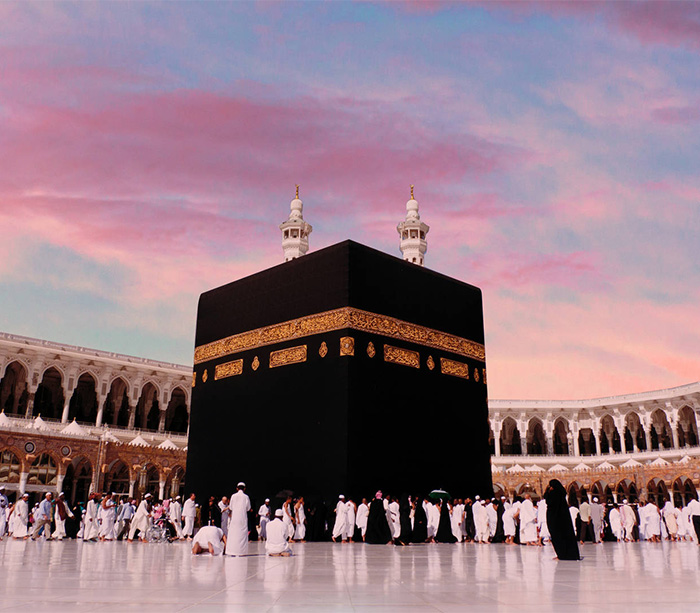
Pilgrims then return to Makkah to perform Tawaf al-Ifadah, circling the Kaaba seven times counterclockwise. This is followed by Sa'i, walking seven times between the hills of Safa and Marwah.
Days 4-6: 11th-13th Dhul Hijjah (Ayyam al-Tashreeq)
Stoning of All Three Jamarat
Pilgrims stay in Mina for these days and perform the ritual of stoning all three pillars (small, medium, and large Jamarat) each day. Each pillar is stoned with seven pebbles, making a total of 21 pebbles per day.
Completion of Hajj
Tawaf al-Wida (Farewell Tawaf)
Before leaving Makkah, pilgrims perform a farewell Tawaf (Tawaf al-Wida) around the Kaaba. This is the final ritual of Hajj, after which pilgrims are free to depart from Makkah.
Important Notes:
- The rituals must be performed in the correct order and within the specified time periods.
- If a pilgrim is unable to perform any ritual due to health or other valid reasons, there are provisions for compensation (fidyah).
- Throughout Hajj, pilgrims are encouraged to recite the Talbiyah, make abundant dua (supplication), and engage in dhikr (remembrance of Allah).
- Pilgrims should maintain a state of spiritual purity, avoid arguments, and practice patience and tolerance.
Understanding the Spiritual Journey of Hajj
The rituals of Hajj represent a profound spiritual journey that traces the footsteps of Prophet Ibrahim and his family. Each ritual carries deep symbolic meaning that connects pilgrims to Islamic history and reinforces the core principles of faith, submission, and unity. The journey from entering Ihram to the final Tawaf al-Wida encompasses physical movement between sacred sites and spiritual transformation within the heart of each pilgrim.
During Hajj, millions of Muslims from diverse backgrounds, cultures, and social statuses stand together in unity, dressed in simple white garments that eliminate all distinctions of class, wealth, and status. This powerful demonstration of equality before Allah is a reminder that in Islam, superiority is based solely on piety and righteousness, not worldly achievements or possessions.
The challenging nature of the Hajj rituals—walking long distances, standing for hours at Arafat, spending nights under the open sky, and navigating large crowds—teaches patience, endurance, and reliance on Allah. These experiences help pilgrims develop spiritual resilience that they can carry back to their everyday lives, facing challenges with renewed faith and perspective.
Keywords: Hajj rituals, Hajj pilgrimage, Islamic pilgrimage, Makkah pilgrimage, Kaaba tawaf, Arafat standing, Muzdalifah, Mina, stoning of jamarat, animal sacrifice, ihram, sa'i, hajj guide, hajj steps, hajj requirements, hajj obligations, hajj spiritual meaning, hajj history, prophet Ibrahim, Islamic worship